
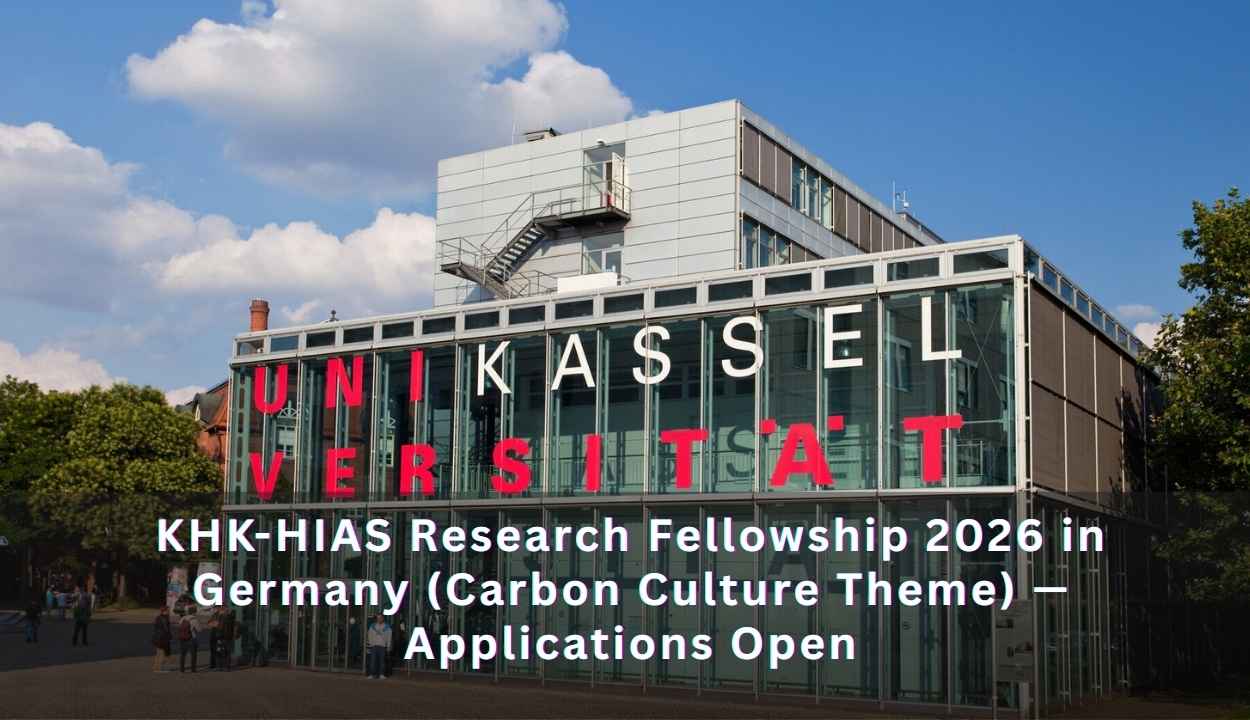




KHK-HIAS Research Fellowship 2026 in Germany (Carbon Culture Theme) — Applications Open
Germany’s University of Kassel and HIAS invite global researchers to apply for the 2026 KHK-HIAS Fellowship on “Carbon Culture,” offering funded residency in Hamburg and Kassel.
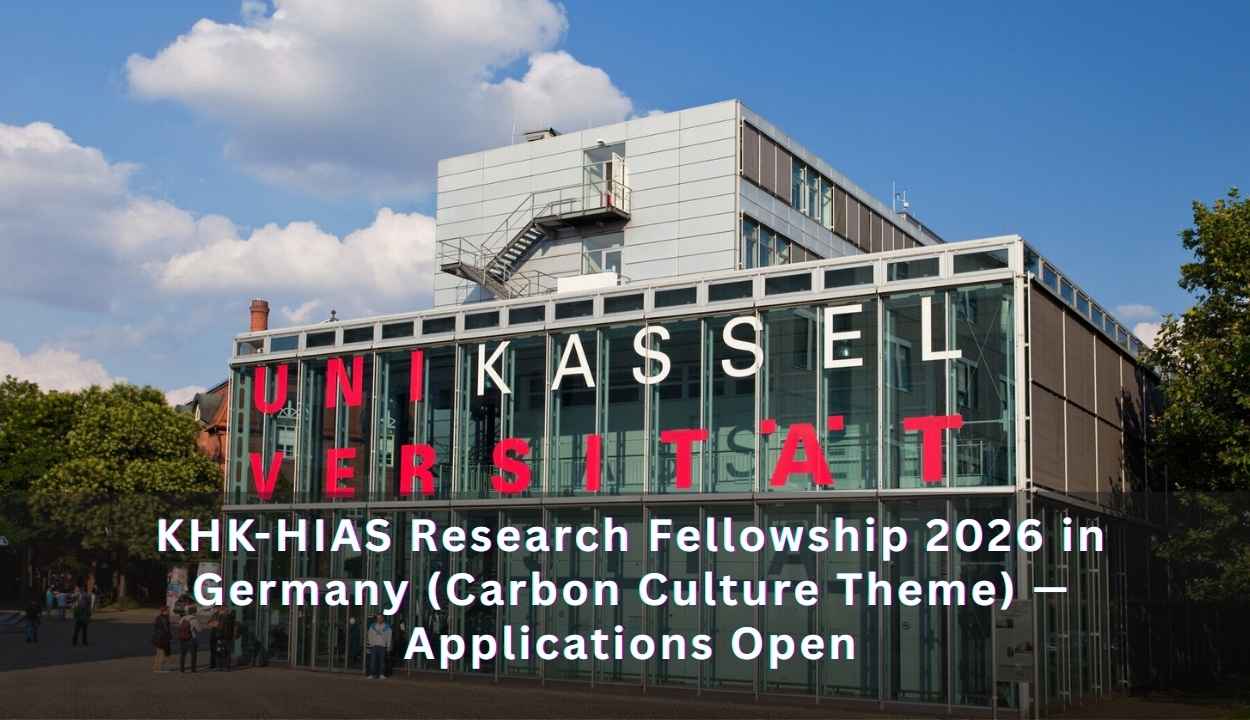
The Käte Hamburger Kolleg “Rohstoffwelten – Kulturen im Umbruch” at the University of Kassel, in partnership with the Hamburg Institute for Advanced Study (HIAS), has officially announced the KHK-HIAS Research Fellowship 2026. The international fellowship invites scholars from across the world to conduct an on-site research project in Germany, with residency periods in Hamburg and Kassel beginning in October 2026.
The program is supported by the German Federal Ministry of Research, Technology and Space and will run as an interdisciplinary research center focused on global transformations connected to raw materials, energy systems, and culture.
Fellowship Structure
Selected fellows will spend 10 months in residence:
-
October 2026 – February 2027: Hamburg Institute for Advanced Study (HIAS)
-
March 2027 – July 2027: University of Kassel
All research activities take place on site. Fellows will participate in seminars, workshops, conferences, and academic exchange programs with an international research community.
The 2026/27 academic year will focus on the central research theme “Carbon Culture.”
Research Focus — Carbon Culture
The fellowship explores how fossil resources such as oil, gas, and coal have shaped societies, politics, economies, and everyday life. Rather than studying raw materials only as technical or economic resources, the project examines their cultural and historical influence.
Researchers may explore questions such as:
-
How fossil energy shaped modern societies and institutions
-
Cultural and political narratives around industrialization and modernization
-
Why fossil-fuel systems continue despite climate debates
-
Social practices and conflicts connected to energy transition
The program brings together humanities and social science scholars working on sustainability, political economy, cultural studies, environmental history, and related fields.
What Fellows Receive
The fellowship provides strong academic and practical support, including:
-
Competitive monthly fellowship funding (for fellows without salary support)
-
Option to fund a temporary replacement at the fellow’s home institution
-
Travel expenses to and from Germany
-
Assistance in finding accommodation
-
Fully equipped workspace
-
Access to academic resources at the University of Kassel and the University of Hamburg
-
Guidance toward research publication
Fellows are also encouraged to organize workshops, public discussions, and collaborative research activities.
Eligibility
Applications are open to postdoctoral and senior researchers in the humanities and social sciences.
Applicants must:
-
Hold a completed PhD at the time of application
-
Have relevant academic publications
-
Demonstrate original research ideas related to the program theme
-
Be willing to actively participate in a collaborative academic community
-
Have strong English communication skills
Required Application Documents
Applicants must submit a single PDF containing:
-
Motivation letter
-
Research proposal (maximum 3 pages with work plan and expected output)
-
Curriculum Vitae (including key publications)
-
Description of current professional position
-
Statement linking the project to a HIAS partner institution
-
Explanation of interdisciplinary relevance
-
Proposed teaching topics or syllabus
Applicants must also complete the official application form.
Important Dates
-
Application Deadline: 15 April 2026
-
Selection Results: 15 June 2026
-
Fellowship Start: 1 October 2026
Contact Information
Email for applications and inquiries: [email protected]
Why This Fellowship Matters
Energy transition and climate change debates are reshaping politics, culture, and global economies. This fellowship gives researchers time, funding, and an international academic network to study these changes deeply while developing publishable research.
The program is particularly valuable for scholars working on sustainability, environmental humanities, political economy, and cultural analysis of energy systems.
Follow this page for more fellowship opportunities 2026
What's Your Reaction?
 Like
0
Like
0
 Dislike
0
Dislike
0
 Love
0
Love
0
 Funny
0
Funny
0
 Angry
0
Angry
0
 Sad
0
Sad
0
 Wow
0
Wow
0