



























Canopy One Health Internship Support 2026 (Canada): Up to $10,000 Funding for Research & Public Health Internships
Canopy One Health Internship Support 2026 offers up to $10,000 funding for graduate students and early career researchers in Canada to complete public health and zoonotic disease research internships.
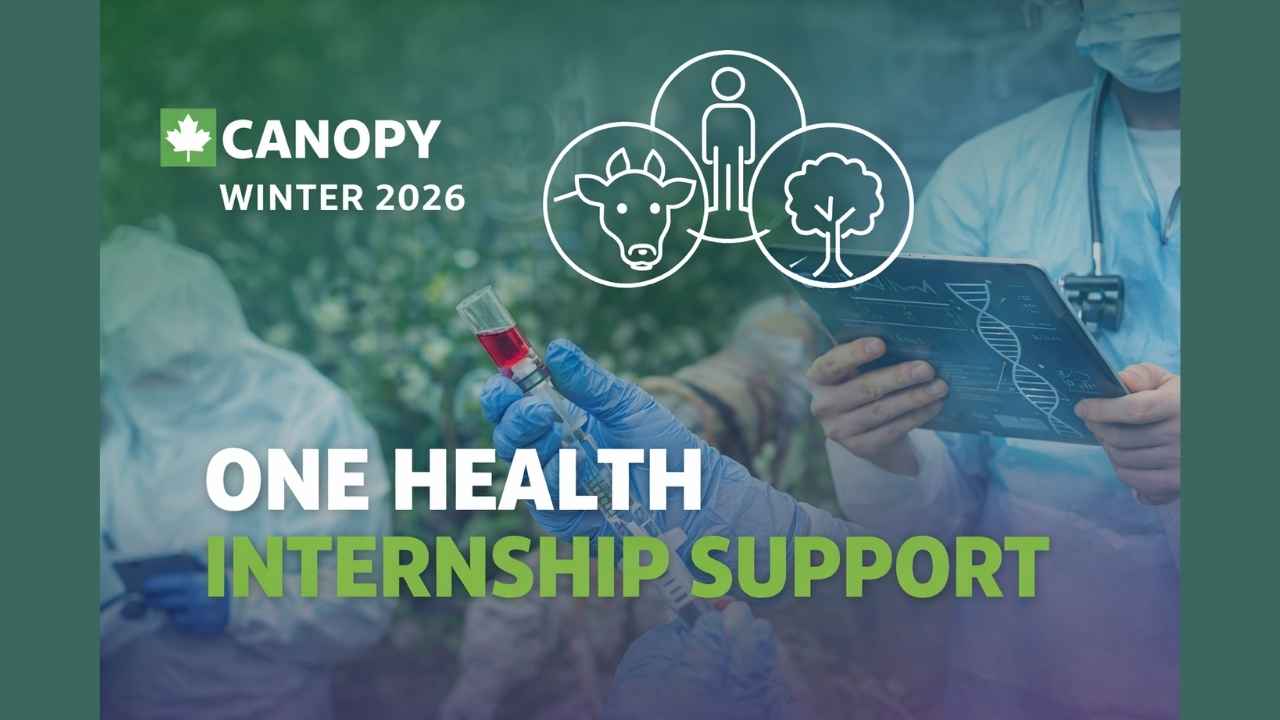
The Canadian One Health Training Program on Emerging Zoonoses (Canopy) has officially opened applications for Winter 2026 Internship Support. The program will fund selected trainees across Canada with up to $10,000 to complete an internship in Summer or Fall 2026 at a different institution, organization, or sector. The deadline to apply is March 9, 2026 (11:59 PM EDT).
About the Canopy Program
Canopy is a national training initiative designed to prepare researchers and professionals to prevent and respond to diseases that spread between animals, humans, and the environment — commonly called zoonotic diseases.
Instead of a traditional internship placement, Canopy supports students and early career professionals financially so they can complete a meaningful internship that expands their experience beyond their current university or workplace.
The goal is simple: build a new generation of specialists who can handle future public health threats and pandemics through a One Health approach, which connects human health, animal health, and environmental health.
Funding Amount
Selected applicants may receive:
-
Up to $10,000 funding
-
Support for up to 3 months of internship experience
-
Coverage for:
-
Travel
-
Accommodation
-
Living expenses
-
Tuition or training costs
-
(The award cannot be used for laboratory equipment or research supplies.)
Who Can Apply (Eligibility)
You are eligible if you are in Canada and belong to one of the following groups:
-
Master’s students
-
PhD students
-
Postdoctoral fellows
-
Clinical interns or residents
-
Early career researchers (within 5 years of last degree)
Applicants from all disciplines are welcome, including:
-
Public health
-
Medicine
-
Veterinary science
-
Environmental science
-
Social sciences
-
Policy
-
Indigenous knowledge studies
-
Humanities and arts
Priority consideration will be given to Indigenous applicants.
Students who already received Canopy internship funding before are not eligible.
Internship Focus Areas
Your proposed internship must connect with at least one Canopy priority area:
1. Health, Sustainability & Resilience
Projects that improve human, animal, or ecosystem health and reduce disease risk.
2. Disease Prevention
Work involving surveillance, infection patterns, AI modeling, environmental drivers, or community engagement to prevent outbreaks.
3. Preparedness & Response
Projects related to diagnostics, genomics, laboratory safety, risk assessment, or pandemic response planning.
Program Expectations
Selected trainees will also join the Canopy training cohort and must:
-
Present their internship experience at a future Canopy symposium
-
Attend occasional virtual meetings
-
Complete the “Indigenous Canada” course (University of Alberta)
-
Finish CIHR research training modules
-
Maintain a personal learning plan and reflective journal
Additional travel support will be provided for program activities.
Application Requirements
Applicants must submit:
-
Internship proposal (500 words)
-
Explanation of how it complements current training (250 words)
-
Motivation statement (250 words)
-
Detailed budget
-
Confirmation from:
-
Host mentor
-
Home institution mentor
-
-
CV (max 4 pages)
-
Completed EDI questionnaire
-
Commitment to complete required training
Your mentors may come from academia, government, industry, or nonprofit sectors.
Important Dates
-
Application deadline: March 9, 2026
-
Results announcement: Expected by end of April 2026
-
Internship period: Summer or Fall 2026
Next application call will open again in Fall 2026.
Why This Opportunity Is Important
Many public health emergencies — including pandemics — start as animal-to-human infections. Programs like Canopy are preparing specialists who can identify risks early and prevent outbreaks before they spread.
The internship support is valuable because it allows students to work outside their usual environment, collaborate across disciplines, and gain practical experience in policy, research, or field work. It also helps applicants build strong academic profiles for research careers, government roles, and international organizations.
Contact
Email: [email protected]
Students interested in public health, infectious diseases, veterinary science, environmental policy, or pandemic preparedness should consider applying early. The selection process is competitive and focuses on both the quality of the internship proposal and the applicant’s motivation to contribute to future disease prevention efforts.
For More Opportunities like this click here
What's Your Reaction?
 Like
0
Like
0
 Dislike
0
Dislike
0
 Love
0
Love
0
 Funny
0
Funny
0
 Angry
0
Angry
0
 Sad
0
Sad
0
 Wow
0
Wow
0


![Associate Attorney – Consumer Class Action & Mass Arbitration [New York City, NY]](https://globalinterndesk.com/uploads/images/202609/image_6a97d594c545a_mid.jpg)