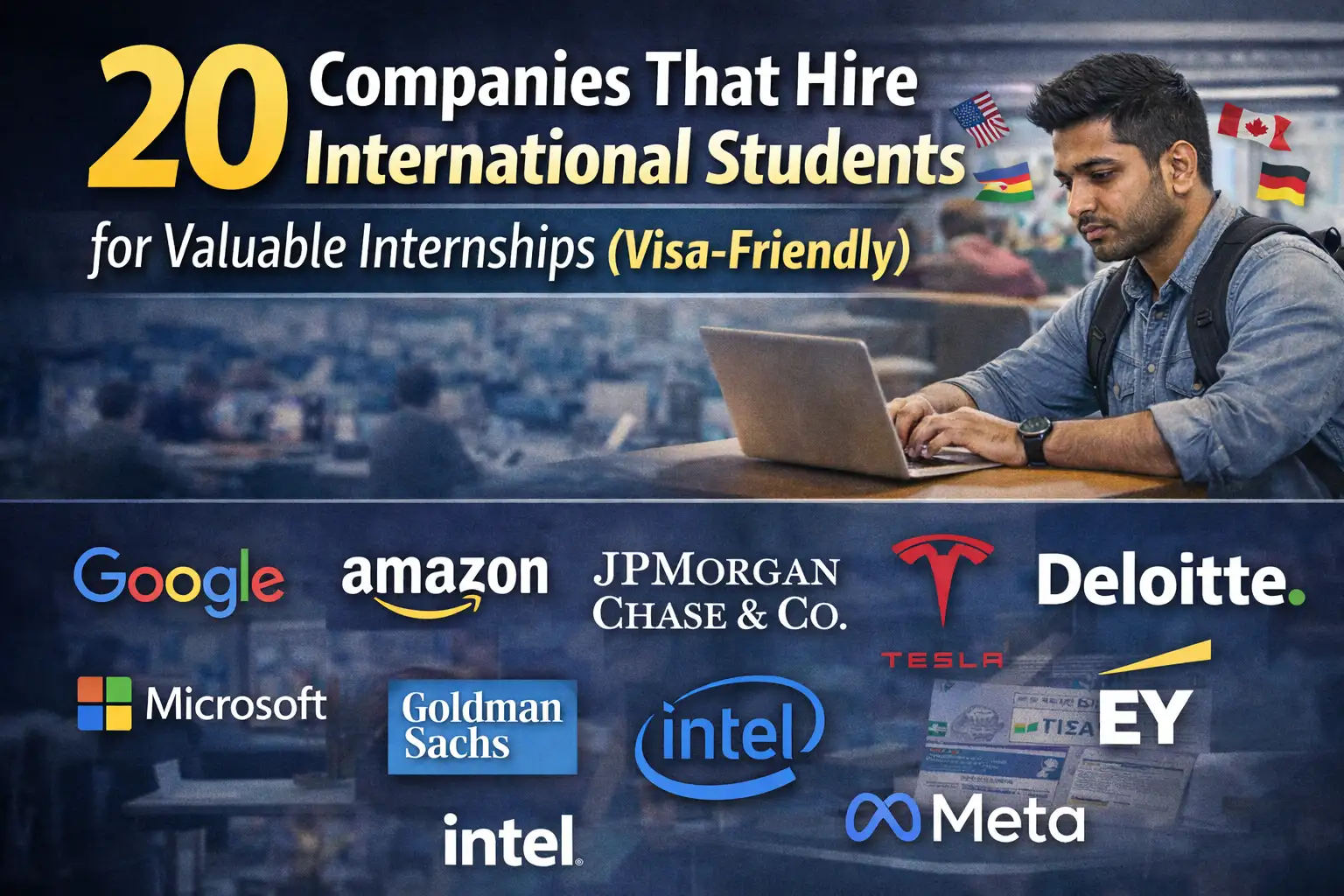
























Practicum vs. Internship – Which One Actually Lands You the Job?
Choosing between a practicum vs. internship in 2026? Learn the critical differences in pay, responsibilities, and job placement rates to fast-track your career success today.
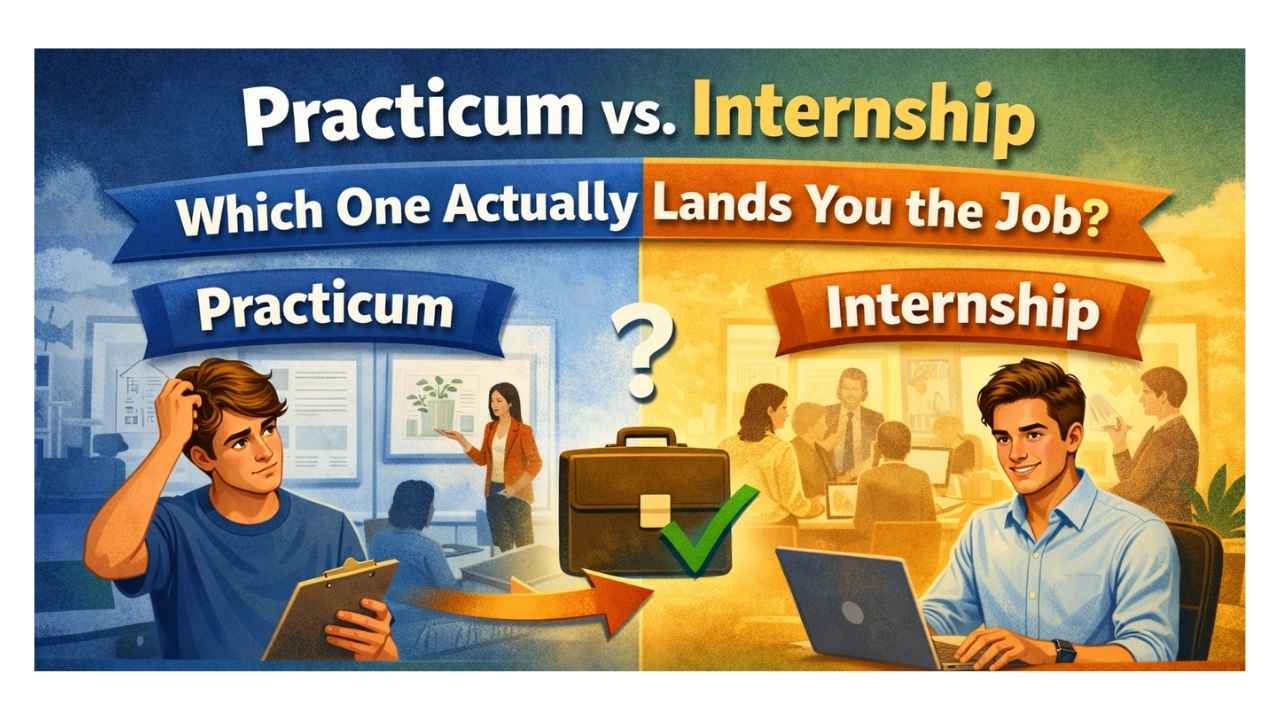
The year is 2026. AI is writing half your emails, cars are arguably smarter than some of our neighbors, and the job market? Well, it’s more competitive than a limited-edition sneaker drop. If you’re a student or a career-changer staring at your degree requirements, you’ve likely hit the "Final Boss" of experiential learning: The choice between a practicum and an internship.
While they might sound like interchangeable academic jargon designed to keep you in school longer, they are actually two very different beasts. Think of it this way: a practicum is like sitting in the passenger seat of a car watching a professional driver, while an internship is like being handed the keys and told, "Don’t hit the curb."
Let's break down the 2026 landscape of these two career-starters so you don't waste your time (or your sanity).
1. What is a Practicum? (The "Look But Don’t Touch" Phase)
A practicum is a field experience where the primary goal is observation. In 2026, many specialized fields—think Nursing, Social Work, and Education—still use these as mandatory building blocks.
During a practicum, you aren't expected to run the department. You are there to shadow, document, and learn how classroom theories actually survive the "real world." You might help with small tasks, but you’re under the watchful eye of a professor or a site supervisor.
Key Features of a 2026 Practicum:
- Duration: Short-term (usually a few hours a week for one semester).
- Focus: Academic credit and skill observation.
- Pay: Almost always unpaid. Sorry, your bank account won't feel the love here.
- Supervision: High. You’ll likely have a faculty advisor checking your notes.
2. What is an Internship? (The "Trial by Fire")
If a practicum is the "trailer," an internship is the "feature film." Internships in 2026 have shifted toward being "real jobs with training wheels." You are expected to contribute to projects, meet deadlines, and potentially even handle clients.
According to 2025-2026 data from the National Association of Colleges and Employers (NACE), internships are now the primary recruitment tool for 70% of organizations. They aren't just for fetching coffee anymore; they are your audition for a full-time role.
Key Features of a 2026 Internship:
-
Duration: Long-term (3 to 6 months, often full-time during summers).
-
Focus: Professional development and "employability."
-
Pay: Can be paid or unpaid, but in 2026, the push for paid internships is stronger than ever.
-
Supervision: Moderate. You’ll have a manager, but you’re expected to work independently.
| Feature | Practicum | Internship |
| Primary Goal | Observation & Application | Work Experience & Networking |
| Responsibility | Low (Mostly shadowing) | High (Handling real tasks) |
| Academic Tie-in | Closely tied to a specific course | Often optional or broad |
| Average Hours | 100–150 hours total | 300–600+ hours total |
| The "Vibe" | Educational / Academic | Professional / Corporate |
4. The 2026 Job Market: Why Experience is Non-Negotiable
We live in a world where LinkedIn reports that interns are 25% more likely to land a full-time job within six months of graduation than those who skipped the experience. In fact, many companies in 2026 use internships as a "try before you buy" period.
The competition is getting fierce. Data from Handshake shows that while internship listings in some tech sectors have dipped slightly, applications have nearly doubled. This means you can't just "show up." You have to choose the path that aligns with your 2026 goals.
Pro-Tip: If you are in a field like Psychology or Teaching, you might actually be required to do both. You’ll start with a practicum to see how it’s done, and finish with an internship to prove you can do it yourself.
5. Follow the Money: Are You Getting Paid?
Let’s be real—we all like money. In 2026, the gap between paid and unpaid experience is a "Grand Canyon" sized divide.
-
Paid Interns: On average, they receive nearly twice as many job offers as unpaid interns.
- The Salary Bump: Former paid interns often see starting salaries roughly $15,000 higher than those with no experience
Practicums are rarely paid because they are considered "part of the classroom." If you need a paycheck while you learn, an internship is your best bet—but be ready for the competition. Paid roles in 2026 are highly sought after, with some attracting over 100 applicants per position.
6. How to Choose the Right One for "Future You"
Still confused? Let's use some logic. Ask yourself these three questions:
A. Is it required for my license?
If you want to be a licensed therapist or a teacher, you probably don't have a choice. The state board usually mandates a specific number of practicum hours.
B. Do I need a job right now?
If your goal is to graduate and immediately walk into a corporate office, an internship is the golden ticket. It builds the "social capital" (a fancy word for "knowing people who can hire you") that a practicum lacks.
C. Am I still exploring?
If you aren't sure if you actually like the industry, go for a practicum. It’s less commitment and allows you to "people watch" the professionals before you commit to the 40-hour-a-week grind.
7. The "Hidden" Benefit: Networking in 2026
In the age of AI-driven resume filters, "who you know" is more important than "what you know."
-
Practicums give you access to professors and academic mentors
- Internships give you access to hiring managers, VPs, and that one person who knows where the best office snacks are kept.
According to Research.com, 95% of employers rank "professionalism" as a top tier-one competency. Both experiences teach you how to not be "that person" in the office, but internships give you more time to master the art of the corporate handshake (or the 2026 equivalent: the polite Zoom exit).
8. Real-World Facts You Can't Ignore
To keep this professional and grounded, let's look at the hard numbers from 2025/2026 reports:
-
Retention Rates: Over 70% of employers make full-time offers to their interns.
-
Conversion: Roughly 66% of interns accept those offers and stay with the company.
- The "Remote" Factor: In 2026, about 45% of internships are now remote or hybrid. Practicums, however, remain largely in-person because it’s hard to "shadow" a nurse through a webcam.
9. Conclusion: Don't Just Graduate, Launch.
Whether you choose a practicum or an internship, the worst thing you can do in 2026 is nothing. The "gap" on a resume is much harder to explain when your peers are graduating with hundreds of hours of hands-on experience.
-
Choose a Practicum if you want to see the "why" behind the work.
-
Choose an Internship if you want to do the work (and get paid for it).
At the end of the day, Google Discover doesn't care about your degree—it cares about your authority and expertise. Starting that journey with the right field experience is the smartest SEO move you can make for your own life.
Sources for Verification:
Would you like me to help you draft a cover letter specifically for a 2026 internship or practicum role?
The Difference Between Practicum and Internship
For more opportunities, click here.
What's Your Reaction?
 Like
0
Like
0
 Dislike
0
Dislike
0
 Love
0
Love
0
 Funny
0
Funny
0
 Angry
0
Angry
0
 Sad
0
Sad
0
 Wow
0
Wow
0

![Associate Attorney – Consumer Class Action & Mass Arbitration [New York City, NY]](https://globalinterndesk.com/uploads/images/202609/image_6a97d594c545a_mid.jpg)